Friday, May 15, 2009
Wednesday, May 6, 2009
How to read those collector car ads
source: http://mid-atlantic-aroc.com monthly e-newsletter
------
Description / Meaning
One owner Hertz Ideal for enthusiast Total restoration needed Mechanic's Special Needs major overhaul Good mechanics Bad body Good body Bad Mechanics Marriage forces sale It can be done in a Spider, they did, and must get married Stored two years Engine seized, small maple growing through chassis No dealers No body knows anything about these cars Collector's item Price is over-inflated Good tires That's all that is good about it Excellent condition Buyer beware Divorce forces sale Spent more time and money on car than wife Company car forces sale I've got a better job and getting a decent car Baby forces sale Can't pour any more money into this thing House forces sale Neighbors complaining In need of total restoration In pieces Lack of time forces sale Spent more time than it's worth Dismantled for restoration I can't put it back together Slight accident damage Total write off OBO (or best offer) I may come down 50 bucks Offers I haven't the nerve to put a price on the car Daily Driver High mileage and million things need fixn' Genuine mileage Disconnected speedo-cable Good driver Looks terrible Runs strong same as above Owned by lil' old lady from Pasadena Will bargain I'll get mad, you won't buy the car and I'll hit you Will consider trade Anything to get out from under this dog Some rust You can brake like Fred Flintstone
Friday, May 1, 2009
Only have enough $$$ for 1/2 of a Ferrari? Well these halves are for sale...
Before and After pictures of my 2002 Maserati 4200 GT coupe
Sunday, February 22, 2009
MyVRL

For all you race car and racing fans... a new cool site is up and running. Find me on there occasionally.
http://www.myvrl.com
Thursday, February 12, 2009
Sunday, February 8, 2009
Garage Find sells for $4.4M

AP: LONDON (Feb. 7) - A car abandoned in a garage in Britain for half a century sold at an auction in Paris for about $4.4 million Friday.
The 1937 Bugatti Type 57S went under the hammer at Bonhams' Retromobile car show and sale in Paris. It was sold on behalf of the family of its last owner, Dr Harold Carr.
Skip over this content
The 'Creme de la Creme' of Cars
After spending 50 years collecting dust in a garage in England, this rare 1937 Bugatti Type 57S Atalante Coupe is now the prized possession of a European collector. The beauty -- one of only 17 ever made -- fetched $4.4 million at auction in Paris on Saturday.
The orthopedic surgeon drove the car for several years, but in the early 1960s it was parked in his garage in Gosforth, near Newcastle in northern England, where it remained for nearly 50 years until his death in 2007.
Bugatti once represented the height of motoring achievement. The supercar was so ahead of its time it could go up to 130 mph when most other cars topped out about 50 mph.
This particular car is especially valuable because it was originally owned by Earl Howe, a prominent British race car driver, and because its original equipment is intact, so it can restored without relying on replacement parts.
Bonham's said a European collector bought the car.
The company founded in 1909 by Ettore Bugatti collapsed in the 1940s after a long string of racing victories.
The rights to the legendary Bugatti name were purchased in 1998 by Volkswagen, which has built the Bugatti Veyron, one of the world's fastest and most expensive cars.
Thursday, February 5, 2009
Top 10 Most Expensive Cars in Production Today
Well for a lot less money you can enjoy the same thrill by owning a Classic Race Car. I have decide to offer my complete ground-up off frame restored 1971 Alfa Romeo GTAm for sale. For more visit: www.AlfaRomeoGTAm.blogspot.com
Wednesday, January 7, 2009
Another Car Guy
Some pics he sent:
Inside Terry's Last Chance Garage... Racing memorabilia and a place to park his Daytona, Lambo and Acura NSX.Hope to visit his collection soon.
Sunday, December 7, 2008
Never gave it much thought to riding a motorcycle
Wednesday, November 26, 2008
Fair Trade....
Well for the price of loosing my 2002 Maserati GT Coupe I gained two reasonable cars... the first (our green car... so I don't have to make excuses about my carbon foot print) is a 2009 Honda Fit-Sport. Nicely equipped, practical and fun to drive with a 5-speed manual. My daily driver to work and hauling the family on trips 1/2 way across country on only a tank of gas.
The second acquisition is a bit sportier and in the luxury class, not as exotic as the Maser, but for all practical purposes a more reliable, safer vehicle that can haul stuff with AWD traction and lets us have some fun with the top down for half the purchase price and cost to repair. She is a 2006 Audi A4 3.0L V6 Quattro AWD Convertible.
Monday, October 27, 2008
Guess what I found on the net.... Ford's RS200EVO
![]() |
![]() |
![]() |
![]() |
![]() |
![]() |
| 1986 FORD RS200 EVOLUTION ID# SFACXXBJ2CGL00084 BRAND NEW CONDITION CAR WHICH WAS PURCHASED DIRECTLY FROM FORD IN EUROPE BY THE CURRENT OWNER. FORD RS200 EVOLUTION. #084 CAR. 2.1 LITER COSWORTH SINGLE TURBO. 600+ HP. ONE OF 24 EVER MADE. THIS CAR IS FACTORY ORIGINAL AND HAS BEEN DRIVEN VERY LITTLE SINCE NEW. THE RS200 WAS BANNED FROM RALLY COMPETITION IN EUROPE IN THE LATE EIGHTIES BECAUSE THEY WERE TOO FAST AND CONSEQUENTLY BELIEVED TO BE TOO DANGEROUS. RECENTLY THE FIA HAS LIFTED THE BAN ON THESE CARS TO COMPETE IN THE "VINTAGE" RALLIES BEFORE ALL OF THE EVENTS ON THIS SEASON'S EUROPEAN RALLY SCHEDULE BECAUSE OF THEIR POPULARITY THROUGHOUT THE WORLD. EUROPEANS ARE FRANTICLY TRYING TO FIND THESE CARS AND THIS IS AN UNMOLESTED EXAMPLE OF THE REAL THING. TWO POINT ONE SECONDS, THAT'S 2.1 SECONDS, A LITTLE OVER TWO SECONDS. LESS THAN THREE SECONDS. IN THE TIME IT'S TAKEN YOU TO READ THIS, A FORD RS200 EVO CAN REACH 60MPH! FOUR WHEEL DRIVE AND 650BHP FROM A MERE 2.1 LITRE ENGINE MADE FORD'S RALLY CAR AN INSTANT LEGEND WHICH FEW CARS HAVE COME CLOSE TO CATCHING. |
Saturday, October 18, 2008
2008 Euro Auto Fest in Greer, SC
While I advanced registered my Alfa for this years event (missed getting it in last years because she was still in California). I decided NOT to drive her through the horrible rain storms we were having on the eastern side of the state. Did not want to subject my baby to 3.5 hrs of yucky rainy driving. There is always next year. However, did show up to check out the cars. Not as big a turnout as last years event. This year the honored marques of Sweden.
Darren Frank's most beautiful 1969 Iso Grifo was once again present at the show and Michael was offered the chance by the owner to sit inside. Lets just say he didn't hesitate. Was very proud when he thanked Darren (without prompting mind you) for the honor. Nice to see a fellow who shares the love of cars with kids (even a pristine collectible valued at over $365,000).
Saturday, October 4, 2008
The Grand Concours 2008
"Best in Class" at The Grand Concours d'Elegance

My Alfa GTAm won 1st in Class in European Sports car class.


Once again my Alfa GTAm took BEST IN CLASS in the European Sports car division this time at the 2008 "The Grand" Councours d'Elegance in Greensboro, NC.
Also in the September 2008 of "Alfa Owners Magazine" I am featured with the car in "Our Alfas" column. Read it if you can.
Saturday, September 6, 2008
Racing Legend Passes

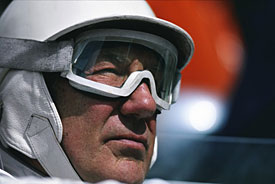
The great Phil Hill passed away on August 28th, 2008. Phill Hill is the only American born Formula One Champion to date. He was also a three-time 24-hours of Le Mans winner. Mr. Hill suffered from Parkinson's Disease.
---
Name: Phil Hill
Nationality: United States of America
Date of birth: April 20, 1927 - Miami, Florida
A cerebral performer who combined legendary concentration behind the wheel with a rather nervous and sensitive demeanor away from the cockpit. A product of the West Coast US sports car racing scene, Hill came to race in Europe briefly in the early 1950s and was eventually offered a works Ferrari drive at Le Mans in 1955. He was to win the famous French endurance race on three occasions and was promoted into the Ferrari F1 team midway through 1958. Hill played a key role in winning Mike Hawthorn's World Championship in 1958, the American slowing and waving his British colleague ahead in the Moroccan Grand Prix, enabling Mike to finish second in this race behind Stirling Moss' Vanwall. In 1961, Ferrari made sure it was well prepared for the first year of the new 1.5-liter F1 regulations and Phil certainly profited by this, winning the Belgian and Italian Grands Prix to take the title by a point from his teammate Wolfgang von Trips who was killed in the same event.
Hill quit Ferrari at the end of 1962 and moved with a number of other Ferrari staff to Carlo Chiti's ATS team. This was not a success. He raced for Cooper in 1964 but then dropped out of the F1 scene and spent several years racing for Ford and then Chaparral in the United States. His last major win came in 1967 when he won the BOAC 500 at Brands Hatch in England. He was 39. After he retired from the sport he established a classic car restoration business with Ken Vaughn in the 1970s. He also did occasional work as a TV commentator for ABC and writing articles for Road & Track magazine. His son Derek raced in Formula 3000 in 2001, 2002 and 2003.
Saturday, August 16, 2008
1st in Class at "Its a Gas" Car Show
Sunday, June 29, 2008
BioFuel Kit / BioFuel Recipe ($40)

As Diesel / Fuel prices continue to rise... why not make your own biofuel.
Using WVO to make biofuel is very easy and will cost less than $1/gallon. I have a time tested recipe / formula for making cheap biofuel.
WARNING: Do NOT use biofuel or greater than 50% biodiesel in modern (after c.2003) biesel engines. If you do, expect to pay $800++ to fix your entire fuel system. Due to viscosity issues, specific gravity and surface tension the mix just ain't right for the modern day engines with their high-brow computer processors and sensors. Trust me... I learned the hard way on my 2005 Jeep Liberty CRD. It cost me in the long run... had to drop the tank, and clean the fuel lines from the tank to the injectors (turned out it was not the biofuel so much as a water issue. The last batch had a high water content that was not "washed out" and cause the fuel to not fire under compression, thus the vehicle stalled every few hundred yards (the tank had to be evacuated and lines purged). If you have an old clunker (VW or Benz that is an 80's or 90's model indirect injector set up... then by all means go for it you can use 100% biofuel or biodiesel. I still use some in my Jeep as it runs much better, smoother and lubricates the engine better.
I am selling plans & kit on how to construct your own small batch kit and how to mix WVO (waste veggie oil) with easily acquired (Gas station & hardware store) ingredients for $50.
**Sorry my last kit just sold in Jan 2008, so I am only selling my recipe now ($10).
Email me at jpsaleeby@aol.com or call (912) 656-2297.
Saturday, June 28, 2008
Wednesday, June 18, 2008
Collector Car Trader Listing for Mazi
http://exotic.collectorcartrader.com/morephotos.php?adId=90335309
Tuesday, June 10, 2008
Monday, June 9, 2008
2003 VW Golf GLS TDI

Acquired today via eBay. This type of vehicle is highly sought after for the simple fact that with gas / diesel prices up to almost $5/gallon... these little babies run at near 50 MPG... trumping most of the hybrid cars on the road. Add the fact that you can make your own BioDiesel or BioFuel for less than a $1/gallon... BADDA-BING, the answer to the fuel crunch.
So without spending a small fortune buying an overpriced hybrid vehicle and not getting raped at the gas pumps (who would you choose to blow your $$$ with... big oil or big car makers?), the answer is one of these early model grease burners. Yes... WVO (obtained FREE) and converted into viable, eco-friendly, lower carbon foot print biofuels will give you 50+MPG and save the environment while keeping your cash firmly where it belongs... in your bank account.
The Positive: a highly sought after VW TDI for under the $10-12K blue book / NADA value. Despite the 140K miles, she looked in rather good shape. Drove the 3 hrs home without too many problems.
The Negative: Things not reported on eBay (that should have been).... large fracture on windshield, torn passenger seat upholstery, 12V power plug not working (turned out to be a fuse, but still), squeaking front suspension (turned out to be the sway bar bearings), missing VW caps on 2 of the wheels, broken (with sizable hole) in R-rear tail lens cover resulting in foggy tail lights. Additionally there was the missing front air-dam molding, and then there was the problem with the AC.... it blew cold for only a day. The car had absolutely no pick-up and the diagnostic at the local VW dealership looked into the EGD-valve, but it was actually all right, the problem was an engine temperature sensor. Once replaced the car ran better but only at 41mpg average over 300-400miles tested, not the ~50mph advertised. Final bill was in excess of $680. These will all get taken care of eventually... but it makes the $8,706 acquisition much less of a bargain. Oh, and the car was filthy at pickup... spent $74 on a total interior detailing (dealers should do this for their customers) Tisk tisk JohnBoy74 (on eBay). PS: there is a bit of loud road noise... maybe the bearings are going in the rear(?) will be checking into that next.
Anyway... for another pic:
She is NO Alfa or Maser, but she does get ~50MPG with fuel costs of less than $3/gallon. Oh and anyone who wants MY tried and tested BioFuel formula.... just email me and for a small fee I will share the process with you. 7/20/2008 addendum: Only ran a few gallons of biofuel in her before I sold her to a nice gal from TX. Carley Mayo an OB nurse from Tx flew in and drove her back home. There is much demand for these early model TDIs for their fuel economy and looks. Plans are for a Jetta Wagon TDI (new). Unfortunately with the new injected diesel there is no room for the use of BioFuel since it can clog the injectors and confuse the computerized sensors and software that run the fuel mix. Also issues with specific gravity and surface tension on the biofuel to make aerosolization complete for good burn.The VW was sold a few months after we purchased it and after repairs and upgrades were made. The owner is a real nice gal from TX, a nurse named Carley Mayo.
Wednesday, May 28, 2008
Tuesday, May 27, 2008
Vintage Alfa leads Maserati GT Coupe
Friday, May 23, 2008
Ciao Bella (1971 Alfa Romeo GTAm)
Friday, May 9, 2008
Maserati History

So near, yet so far... the Vitaphone Racing team came within four seconds of winning the opening race of the FIA GT Championship season for the third year in succession, finishing second at Silverstone. Racing the superlative Maserati MC12 supercar, Michael Bartels and Andrea Bertolini had to settle for second place – and missed out on securing the prestigious Tourist Trophy.
The MC12 has long been the class of the field, securing seven out of ten titles in the three years it has been competing; this is despite the performance of the car being limited by a narrower rear wing and extra weight than its competitors. But the 2008 season did not get off to an ideal start; a wet track, heavy traffic and an unexpected red flag saw Bartels and Bertolini qualify down in fifteenth place, with team mates Miguel Ramos and Alexander Negrão managing to avoid traffic, but could do no better than eighth as they struggled to keep their tires at optimum temperature.
When the race got under way, a heavy mist lay on the circuit – TV long shots showed no cars, only headlights piercing the gray blanket. Bertolini wasn’t going to let the conditions slow him down – he made a charging start, overtaking six cars on the opening lap alone. Making the most of the powerful Maserati V12 engine and the MC12’s great handling, he continued to make progress. Meanwhile Ramos, in the sister car, had held on to eighth until the team brought him in on lap 19. With the track conditions improving the decision was made to fit intermediate tires – and when Ramos immediately went 2s a lap faster, the team knew it was time to bring Bertolini in.
The combination of intermediates and their rivals heading for the pits saw the two Vitaphone Maserati cars climbing up the order; circulating in close company, they were up to 2 seconds a lap faster than the leaders. By lap 39, both cars had made it into the top five; on the next lap it was time for the second pit-stops, with Negrão taking over from Ramos, Bartels from Bertolini.
They each lost only one place during the pit-stops; it was immediately clear that Bartels was on a charge, getting past Negrão on lap 42 to get back into the top five. By lap 46 the two Maseratis had closed on the pack in front of them; Bartels was still fifth, but only 3.2s away from second place! On lap 48 he found a way past the Corvette in front of him to take fourth – and then, on lap 50, the safety car was called into action, to allow a wheel which had become detached from another car to be retrieved. The result was that Bartels found himself less than six seconds away from the lead, a remarkable feat from the eighth row of the grid.
The safety car set up a grandstand finish: five cars within seven seconds of each other, and only 15 minutes of the two-hour race remaining. On lap 54 Bartels made it into the top three; unfortunately Negrão had slipped down the order after making contact with a Corvette going into Copse corner. The battle at the front raged on, with Bartels setting the race’s fastest lap, a 1:47.231, on lap 55. Next time around, he was up to second, going side-by-side with an Aston Martin through Luffield and powering by down the straight.
Only three laps remained, which proved insufficient to allow Bartels to mount an attack on the leader. The Vitaphone team had to settle for second – and Bartels and Bertolini looked delighted with the achievement on the podium. Eight points is a good start to the long, ten-race season, and with Ramos and Negrão picking up two more points for seventh, the team has also begun its title defense with a solid score.
After the race, Bartels and Bertolini were understandably upbeat. “Coming back to score eight points, after our poor qualifying session, was a result we didn’t expect,” Michael said. “It’s a good start to the season. Of course, there are always things to improve, and we’ll be working on them.” Andrea was similarly pleased. “The beginning of the race was quite hard, starting so far back, but we managed to improve, and we scored some important points at the start of the championship. It’s good for the team, because they have been working really hard.”
The next outing for Vitaphone Racing will be on 18th May, at Monza – the ‘cathedral of speed’. The race is on home turf for the Maserati MC12 supercar, so the Italian fans will be out in force, cheering on Vitaphone and Maserati.
----------------
Maserati and Moss – the Perfect PairingA legend’s views on classic Maserati racers
In previous issues of Maserati Monthly, we’ve looked back at some of the famous cars in Maserati’s history, both road cars such as the Quattroporte and Ghibli, and the racing cars for which the Trident is justifiably renowned. This month, instead of profiling one car, we thought we would take a look at several cars, from the viewpoint of a driver who drove all of them. Sir Stirling Moss has been described as ‘the world’s greatest all-rounder’, someone who drove every kind of car on every kind of circuit, including almost every racing Maserati during the 1950s.
He also maintained a comprehensive diary, which recorded everything from his racing exploits to the night life – one entry ends “John took Pat & I to Milan and we checked into the Palace. Had a good meal at the B. Napoli & then went to the Jazz Club VG. Bed at 2:30am”. The diaries were used as the basis of the fantastic book “Stirling Moss – My Cars, My Career”, written with noted auto historian Doug Nye. It's a must-have for any racing fan, and any Maseratisti. An indication of the status that Moss achieved during his dazzling career is that the foreword was written by no less a man than Juan Manuel Fangio, who won the Formula One World Championship no fewer than five times, his final title coming at the wheel of the Maserati 250F. Fangio, of course, is often regarded as the finest driver in history, winning about half of the races he contested. And Fangio regarded Moss as his equal and successor.
The book has separate chapters for each car Moss drove – some getting just a page or two, others being covered in great detail. It is hardly surprising that his two stints with the Maserati 250F grand prix car take up eleven pages – the car propelled Moss onto the world stage in 1954, and took him to the runner-up spot in 1956.
Another version of events is contained in the authorized biography of Moss, by Robert Edwards. This has more flowing narrative, taking events in chronological order rather than splitting them up according to the cars being driven. We have looked at both books, and together they give a very complete overview of Moss’ racing exploits in Maseratis.
The incomparable 250F was Moss’ first significant encounter with Maserati. He had been campaigning a succession of British cars, such as HWM, Cooper-Atlas and ERA, with little success; his family ordered a new ‘customer’ 250F for the 1954 season – at a cost of £5,500! At first, relations with the factory were somewhat strained – Moss insisted on a right-side throttle pedal instead of the traditional Italian arrangement of the throttle being the center pedal, and to get the seating position Moss preferred his mechanic, Alf Francis, actually crept into the factory at night and altered the chassis tubes.
From the first time Stirling drove ‘his’ car, chassis 2508, in its first test at the Autodrome of Modena in April 1954, he loved the car. To quote Edwards, “And it was the most amazing fun. As Stirling started to explore both his own limits and those of the car he realized that he had found, potentially, the ideal dancing partner. If he did not step on the Maserati’s toes, then it would treat him gently in return, but being Stirling, his first steps were far from tentative ones.” Indeed, according to Edwards the 250F did much to shape Moss’ approach to the cars he drove later in his career. “The great thing about the Maserati was that it handled so well, the years of experience that had fed into the design were evident. Stirling was always happiest in a machine that had evolved, as opposed to one which had been designed from scratch. Simply sitting in the cockpit, he could tell that at least a generation of know-how had gone into it; it made every single-seater he had driven up to that point (apart from the brief outing in the Alfa 159) seem crude by comparison.”
The combination of Stirling Moss and Maserati 250F proved to be quick right from the start, and the first race win came within a month, in a Formula Libre event in Britain. Unfortunately, victories were few and far between in 1954; in too many races he was forced to retire by niggling problems, some caused by the team’s unfamiliarity with the car. At other events the team’s ‘customer’ status held them back – in particular, Moss used fewer revs (and thus got less power) than the factory team, because he would have to foot the bill for any engine damage!
A cutaway drawing of the 250F six-cylinder engine fitted with carburettors and a longitudinal section through the same unit.
Yet the potential was clear; in his first grand prix in the Maserati, the Belgian GP held on the daunting Spa-Francorchamps circuit, he finished third, behind Fangio – who won the race in a ‘works’ 250F, and the Ferrari of Trintignant. ”I really had taken to the Maserati… above all, it was just a lovely car to drive. It steered beautifully, and inclined towards stable oversteer which one could exploit by balancing it against power and steering in long sustained drifts through corners,” is how he described it.
Despite being a customer team, Moss and Alf Francis became accepted by the factory – to the point where Alf was accorded the singular honor of having his own workbench within the racing workshop. The Managing Director of Maserati, Omer Orsi, also encouraged Moss to use more revs, offering to pay for any engine failure that ensued. Paradoxically, the success of Moss in the 250F meant that the car saw less use; he was snapped up by Mercedes-Benz for the 1955 season, so the Maserati was used only for non-grand prix races.
Mercedes withdrew from motorsport at the end of 1955, in the wake of the infamous crash at that year's Le Mans 24 Hours. Moss joined the Maserati works team for 1956, as team leader; he won the Monaco and Italian grands prix, and finished on the podium in Belgium and Germany. At the end of the season he was second in the championship, just three points behind Fangio.
As a result of his good performances in the 250F, Moss also raced numerous Maserati sports cars. One example was the 300S, a car which Moss adored. Hardly surprising: in sixteen races, he won nine and took another four podium finishes. “With a record like that, can you see why I have such fond memories of these beautiful cars?... No doubt about it, apart from the ‘Birdcage’ this was my favourite front-engined sports Maserati… one of the easiest, nicest, best-handling sports-racing cars ever made,” was his verdict.
The combination proved successful right from the start, with Moss and Carlos Menditeguy winning the Buenos Aires 1,000km race, then taking victory in the 1,000km race at the Nürburgring with Jean Behra. More victories followed; his final race in the car was in Denmark in 1958, where he finished second. “That was the last time I raced any 300S. It really was one of the nicest of all Maseratis. I remember them and the team, the Orsis, Alfieri, Bertocchi and the other mechanics, with affection. I had found my feet at top level driving their cars, and for three seasons enjoyed a lot of success with them.”
Edwards agreed – in his assessment: “Maserati’s sports cars were very good indeed. Aside from his Aston Martin commitments, Stirling was free to use the new Maserati 300S which was an inspiring car to drive as well as being utterly beautiful. It had the usual Maserati characteristics; neutral handling spiced with a slight natural oversteer and an F1-derived engine which seemed unburstable. The transmission by Valerio Colotti was well-night perfect and it was to be years before it was surpassed, from Stirling’s point of view.”
And the car that surpassed it was, naturally, a Maserati; the Tipo 60, first in a series which became universally known as ‘Birdcage’ due to the intricate latticework of tubes which made up the chassis. Edwards again: “It was as different from previous offerings as it could be; and a quick trip around the Modena test track revealed that it was faster (and more agile) than any 250F, despite its tiny 2-liter engine. Stirling found it enchanting, and after marvelling at the ingenuity of its space-frame construction which provided huge strength as well as being light, asked to see it again later in the season.”
Moss only completed five races in the Birdcage, and scored three victories. The combination won first time out at Rouen, and again in the Cuban GP in Havana. The finest race came in the 1960 1,000 Kms at the Nürburgring, where he shared the car with Dan Gurney. The pair lost half a lap fixing a broken oil pipe during a pit-stop before Dan took over the car. “This was the kind of driving the ‘Birdcage’ allowed. On lap 24 he was 1 min 35 secs behind Phil Hill’s Ferrari. Next lap the gap had shrunk to 47 secs, the lap after that 15 secs and on lap 28 he came hammering past the pits in the lead.”
Stirling’s verdict on the ‘Birdcage’ was simple: “A fabulous car – light, very nimble, fantastic brakes, super steering, enormous torque and good power.” He had no way of knowing that the ‘Birdcage’ would be the last Maserati he would drive during his career as a racing driver; in 1962 he barely survived an enormous accident at Goodwood, an accident which left him in a coma for over a month. He never raced again as a professional driver, but his name and personality remain synonymous with the phrase 'driving legend'.
Wednesday, May 7, 2008
TAS finally apologizes
The e-mail exchange between Brad Winkfein (one of TAS owners) and me (some 4+ months after the fact):
From: Brad Winkfein
To: 'JP Saleeby'
Sent: Tue, 6 May 2008 4:50 pm
Subject: RE: 2002 Maserati GT Coupe (Green)
Mr. Saleeby,
First of all I would like to apologize to you for the manner in which you were treated. Regardless of the circumstances it is inexcusable to treat a customer poorly or to respond in a hostile manner and you can rest assured that the proper discipline has been enforced. Communication is the key to resolving any issue, when the parties involved fail to communicate the end result will always be unpleasant.
In reviewing the emails it is obvious where and when the problems began and regretfully it is too late to recover or reach an amicable solution.
Saleeby: Sunday, January 06, 2008 8:17 PM See not to Straightline. Went over the car with Ken... there was a new chip in the findshield that is pretty big... big enough to warrant a repair or replacement. It is not just sand blasted... almost goes all the way thru. Would like to file a claim with you to have that fixed.
Saleeby to Straightline Sun, 6 Jan 2008 9:13 pm: TAS dropped off the car about 3PM today. Transporter did a good job, however there was residue of "oil" on the hood indicating it was under another car (oh well), and there was a large stone chip in the windshield that was not there during the inspection (I could tell it was a fresh chip because there was dust and glass fragments around it), will report this to TAS tomorrow. All in all the car looks good. Under the hood the oil was quite low and the oil cap was almost impossible to remove.. had to use a block of wood and a mallet to break the seal. Don't think the oil was changed in quite a while. None the less, the car was as described and I am pretty happy with things. Planning to take her in for a complete servicing in either Greenboro, NC or Atlanta, GA's Maserati dealerships. Will await the paperwork from you guys so I can get my license and tags.
Merritt Tue, 8 Jan 2008 2:14 pm: Generally windshields are not covered on open shipments. *If there is a claim, it will need to be filed with the carrier and their driver. If you have any questions or need any assistance, please call or email me back at any time.
Saleeby Tuesday, January 08, 2008 1:35 PM: That cannot be true... the driver had a sheet outlying all scratches and mares on the car. This stone chip was new and recent (acquired on the trip). **Please follow up on this as a claim should be filed since damage ocured when the car was transported. *You guys are covered for this I am sure. Why would you not be?
Please pass this information along to Ken who was the driver you booked for me.
Merritt Tue, 8 Jan 2008 3:01 pm: ** Ijust got off the phone with Ken (K&L Autotransport) and he says the pit that you are talking about was already there when he picked up the vehicle from Straightline and is clearly marked on the copy of the BOL that I have. I don’t see anything new added to the BOL after delivery. If you have a copy of the BOL, please send me what you have because everything I have has it marked before shipment.
Saleeby Jan 8, 2008, at 8:45 PM: **Ken pointed out to me some very minor "sand blastings" that were noted on his BOL. However, this particular "chip" was quite significant and NOT on his BOL. I can take a photo of this and email it to you. ***My inspector from CarChex gave an "Excellent" report to all the Glass.... he would not have given such a good mark with this type of chip. One cannot ignore this as it is in the direct line of vision of the passenger seat rider. As I recall my PPI inspector was a passenger during the test drive. No way he would have missed this. So the chip had to of occurred after the Inspection and before the time of arrival in Bennettsville. Other evidence was the fact that there were tiny pieces of glass shards and "dust" from the apparent rock or debris that hit the windshield. Thank you for your consideration, What is the next step?
*Our terms and agreements state the carrier is liable for all damages, according to the Federal Motor Carriers Safety Association we are not allowed to carry insurance on vehicles that are transported by other carriers. As is our policy stated in our terms and agreements you were instructed to deal with the carrier and we would assist you through the process.
**Merritt did follow and called Ken the driver for K&L Autotransport
**If the damage is not marked on the bill of lading as an exception at the time of delivery it cannot be proven that the damage occurred while in transport. No insurance carrier nor carrier will pay for damages without proof that the damages occurred during transport. In this situation the driver said he had marked the chip at pick up and that it was preexisting. He denied your claim at that time and without a bill of lading to prove otherwise there is little that can be done.
***While an inspection is a credible source for the inspection of a car it is very little help in this situation. The inspection did not occur immediately before the vehicle left and does not provide any chain of custody documentation in the way a bill of lading does. There is no proof that the chip did not occur after the inspection but before it was loaded therefore it is not reliable. The inspection is also questionable because you stated you had problems checking the oil and that the oil was low, this leads me to believe the inspector was less than thorough.
It is our goal to provide each and every customer with quality service but in this case it did not happen and for that I am sorry. The emails that followed these are responses from two individuals that are angry the problem is that one is allowed to get angry and the other must try to accommodate, he is not allowed to become angry. While I disagree with the customer service in this situation it is my opinion that the proper outcome in regards to the claim was reached. I disagree with your second suggestion the cost to repair windshields is considerably more than a happy meal and I don’t think that we should bare the expense of paying for a damage not caused by us to a property not owned by us. Damages to vehicles while being transported are unfortunate and We provide a service as a shipping broker we are not the carrier we never had possession or even saw your vehicle. For example if I use a mail store to ship a package through UPS and damages occur while in the possession of UPS I would file my claim with UPS not the mail store. I am sorry that there was damage to your windshield it was unfortunate and I am sure that it detracted from the excitement of getting the car but the policies and procedures that are in place are there to protect all parties. If they are not followed the system breaks down a driver that fails to list or mark a damage when he picks up the vehicle is liable for that damage. I know it is of little satisfaction to you but since you were so adamant the damage occurred during transport we have added K&L to our do not use list of carriers. Our carriers must be trustworthy and honor their responsibilities his refusal to pay your claim proves otherwise.
Please feel free to contact with me with any questions
Best Regards,
Brad Winkfein
Managing Operator
Texas Auto Shipping
4740 Frank Luke Drive
Addison, TX 75001
972-248-9121 ph
972-346-6880 fax
This email and any attachments are intended only for use by the addressee(s) named herein and may contain legally privileged and/or confidential information. It is the property of TexasAutoShipping, LP and its Affiliates. If you are not the intended recipient of this email, you are hereby notified that any dissemination, distribution or copying of this email, any attachments thereto, and any use of the information contained are strictly prohibited. If you have received this email in error, please notify me at 972.248.9121 and permanently delete the original and any copy thereof.
From: JP Saleeby [mailto:jpsaleeby@aol.com]
Sent: Friday, May 02, 2008 10:19 AM
To: brad@texasautoshipping.com
Subject: Re: 2002 Maserati GT Coupe (Green)
Brad,
Nothing against you personally... but there was some confusion about the BOL. The car was dropped off late in the day and under extreme time constraints that did not allow for a complete inspection in the conditions at the time. I do accept the "minor" sand blasting of the windshield, however, there was a fresh "chip" as evident by the "rock dust" still present on the windshield that was at issue. I had a PPI done and it was so big that the inspector would have notice it. It did not leave TX with that on the windshield... I am almost certain.
My issues are this:
Ms. Merritt was rude and NOT a good representative for your company. You should counsel her in the ways of providing good customer service. I take issue NOT with TAS per se or you for that matter, but rather in the manner in which the situation was handled. I KNOW customer service as a director of an ER. I handle hundreds of patient complaints and consider myself expert at conflict management and a purvayor of good customer relations.
As a gesture of good customer relations I would suggest in the future to provide 1. better e-mail and phone relations (I have copies of the corrrespondences with Ms. Merritt) and I will forward them to you. 2. For the price of a Happy Meal for heavens sake... send a windshield repair kit to a customer. It is by far the cheapest way to keep a customer happy and reduce the risk of "bad press"...
I was quite furious with the encounter with Ms. Merritt... that I went on a campaign to "let the world know" how I was treated. I cannot (nor will I) take any of this back... but it should be a lesson to be learned. Now it is your turn to do damage control. For me it is obvious... re-train or get counseling for Ms. Merritt. If her attitude towards your customers doesn't change... consider termination.
Regards,
JP Saleeby, MD
www.saleeby.net
(800) 965-8482
PS: Email threat to follow.
-----Original Message-----
From: Brad Winkfein <brad@texasautoshipping.com>
To: 'JP Saleeby' <jpsaleeby@aol.com>
Sent: Thu, 1 May 2008 6:39 pm
Subject: RE: 2002 Maserati GT Coupe (Green)
Mr. Saleeby,
I am the owner of Texas Auto Shipping and it has recently come to my attention through the Better Business Bureau that you apparently have an unresolved issue with Texas Auto Shipping in regards to the transport of your vehicle.
My understanding (which may not be correct) is that there was a chip in the windshield that we would not pay to repair. According to the bill of lading that was completed by the driver and signed by dealer the damage to windshield was a pre existing condition as it was marked on bill of lading at origin Never the less a damaged windshield is excluded from coverage if it is not a result of driver negligence. The risk of normal wear and tear resulting from driving the vehicle are much the same as transporting the vehicle on an open carrier, in both instances they are exposed to the road. If vehicle needs to be protected from this risk then enclosed shipping is required.
Texas Auto Shipping was not the carrier and any claims in regards to damage should have been submitted directly to the carrier that transported your vehicle. We should assist you in the claim process and act as a mediator between the two parties but we are not the liable party. While we are not liable for the damages it is still important to me to make sure your interest is protected and that you fully understand the process. In this case the damage was on the vehicle when the carrier picked it up. The dealer that sold the vehicle should have repaired the windshield and this information should have been given to you at that time.
If possible I would like you to forward all correspondence that you sent and received in regards to this matter for me to review. My reputation and that of my company is very important to me and I would like to discuss the matter with you at your convenience. I hope to speak to you soon in order to rectify this issue.
Best Regards,
Brad Winkfein
Managing Operator
Texas Auto Shipping
4740 Frank Luke Drive
Addison, TX 75001
972-248-9121 ph
972-346-6880 fax
Thursday, February 21, 2008
Kudos to Angels Moving Autos & Massey Transport
Here is what I had to say on: http://www.transportreviews.com
| Poster: | JP Saleeby, MD |
| Date: | 2/21/2008 9:42:00 AM |
| Reviewed: | Angels Moving Autos |
| Subject: | Super Angels |
| Review: | I must say Angels Moving Autos were super great! My restoration project (a 1971 Alfa Romeo GTAm tribute car) which is a show car/racing car had a few glitches and was not completed in Nov '07 as it was promised. I had already reserved the transport and arranged for pick up and delivery. The car however was not released by the restoration company and I was up for taking a $250 loss. However, the folks at Angels were so understanding and they had great customer service and follow up they waived any penalties or fees. I decided to let stand the $250 deposit and as they promised it would go towards a re-order. Three months later when work was finished on my car and it was to be released, I contacted them again. Even with rates increasing they held to the original contracted price of $1550 and stated there were no additional fees. I paid the delivery truck driver a COD of $1300 even and continue to sing praises to Angels and their contractor (Massey Auto Shippers). Kudos. A very very happy client!!!! |
------------
| Poster: | JP Saleeby, MD |
| Date: | 2/21/2008 9:49:00 AM |
| Reviewed: | Massey Auto Transport, Oregon |
| Subject: | What a driver! |
| Review: | Massey Auto Transport was great. They treated my collector car (an Alfa Romeo GTAm) like gold. The driver was very accommodating and a true gentleman. Extremely conscientious and took pride in what he did. The car was delivered in excellent condition (actually better.... at pick up it was a bit dirty with hand prints, etc.... but when delivered it actually was quite a bit cleaner... go figure). Anyway, hats off to Massey and their excellent driver Rubin. Would certainly use this carrier again and again. Two thumbs up. JP Saleeby, MD www.VerDe-Motors.com |
You can look up my negative comments on TAS on this site as well.
Sunday, January 27, 2008
Requiescat In Pace Dear Al Leake

----Original Message-----
From: STEVE JENIK <COLFAM.2@ATT.NET>
To: jpsaleeby@aol.com
Sent: Sat, 26 Jan 2008 11:01 pm
Subject: Al Leake
Dear Dr.Saleeby,
My name is Steve Jenik. I and my wife Julie are friends, neighbors and caretakers
for Al and Myr Leake. It is with great regret that I must inform you that Al has crossed
the final finish line in his race against cancer. He passed away, quietly, at home,
amidst family and friends on Jan., 25, 2008 @ approx 2:45 P.M.
I am being presumptious by issuing this notice, as I have no formal family approval
to do so. Yet, after searching the web and finding many references to Al, not
only his racing prowess, but his restoration work and finding your name, I hope that
this takes some burden off of Myr. I presume that you know how to contact the family.
I found the picture of your son with the pinewood derby racer. That choked me up.
I printed it out, but, my printer is not the best quality beast in the world.
Nonetheless, I intend to pass it on to Myr.
Our regards sir,
Steve and Julie
Pax et Requiem Dear Al
----------------
PS: Al, a friend, vintage racer, & Alfisti will sure be missed. -JP
Sunday, January 13, 2008
Michael wins at Pinewood Derby
Cub Scout's PineWood Derby Day

Michael holds up his Pinewood Derby car #69. It was named and numbered in honor of Al Leake (AlfaRomeoRestorations.com) who has been working on dad's GTAm for the past 2.5 years. Al was diagnosed with pancreatic cancer in October 2007 and is undergoing treatment as of this posting. The car was painted a florescent yellow with red top and sported a lego driver with helmet and a tail fin.
We used Al's race car number (69) and wrote PMA and Al Leake Racing Team all over the car. This year was not as kind to Michael... as he swept the speed trials in 2007 winning every heat and taking home the 1st place trophy and earning a spot to go to the state meet.
This year however in the preliminary heats he placed mostly 2nd and 1st... with no 3rd place finishes. He made it into the semi-finals as one of eight cars. The semis were all age groups and packs. He ran a good few races pulling mostly 3rds and a couple of 2nd place finishes. Over all... he took home the 2nd place medal for speed in his bear pack.

Mike in front on the cars "impounded" as they have been checked and weighed by the judges. His is the one on the far left.

Cars were so fast everything was a blurrrr... including this picture of Michael in the semi-finals loading his car on the pinewood derby track.
Next year promises to be awesome... more time and prep work will go into the structure, performance and appearance of the car.
Wednesday, January 9, 2008
Bad Customer Service from Texas Auto Shippers
Read my REVIEW of this company at:
http://www.transportreviews.com/review/00013880.asp
Monday, December 24, 2007
New Addition

The Package includes:
Dark Green Metallic exterior Paint, Tan interior w/ wood trim.
V8 with 6 speed Standard. With just over 20,000 miles
Excellent Condition
| Optional Equipment | |||||
|
|
|
| Standard Equipment | |||||
|
|
|
when you can't have the electric TeslaMonday, December 3, 2007
Cars Cars Cars
Friday, November 23, 2007
1982 Ferrari GTBi
====================================
308 GTB – 30th Anniversary
It seems quite amazing that it is already 30 years since the 308 GTB made its public debut, as the Pininfarina designed body has stood the test of time well, still looking good and able to turn heads in the street, and even to people who weren’t born when it was introduced, it is instantly recognizable as a Ferrari.
Up until the late sixties Ferrari production road cars had traditionally featured a V12 engine, but the introduction of the Dino series with V6 engines towards the end of the decade changed the situation. The new “small” Ferrari attracted a new blossoming market of youthful buyers, and was a great success in the five year production period, despite an oil crisis and increased speed control legislation worldwide. Although there was the sister Dino 308 GT4 2+2 model with a V8 engine, it was not until the introduction of the 308 GTB in 1975 that the Dino 246 GT had a true successor.
However, perhaps a short resume of eight-cylinder Ferrari engines would not be out of order, as it is 65 years since the genesis of a “Ferrari” with an eight-cylinder engine, which preceded the birth of the company by seven years. In 1940 Enzo Ferrari produced the Auto Avio Costruzioni 815 model, which was powered by an in-line 1500cc eight-cylinder engine. This model would have carried a Ferrari badge, had it not been for the terms of his employment contract severance with Alfa Romeo the previous year, which forbade the construction of a car bearing his name for a period of four years. Thus it was not until after the end of the Second World War that he was able to build cars bearing his name carrying the now legendary "Cavallino Rampante" logo.
For virtually the first decade of Ferrari’s existence there were four-, six- and twelve-cylinder engines of a wide variety of capacities produced. However, it was not until the inheritance of the works Lancia D50 Grand Prix cars midway through the 1955 season, that there was a V8 engine in the model line-up, albeit carrying a Lancia badge. In 1956 these cars were extensively modified, although they were visually very similar to their predecessor, apart from now wearing a Ferrari badge, and carried Juan-Manuel Fangio to his third consecutive World Drivers' Championship title.
The V8 Lancia engine was further developed and used in the 801 F1 car of 1957, whilst there were V8-engined sports racing cars like the 248 SP and the 268 SP of 1962. In 1964 the company's armoury in F1 was the V8-engined 158 F1 model and the flat-12 engined 512 F1, basically the same car apart from the engine configuration. The 158 F1 took John Surtees to the Drivers’ Championship title, and a combination of the two models Ferrari to the Constructors’ Championship in Formula One that year.
The V8 engine then disappeared from the Ferrari line-up for almost a decade, before the concept was resurrected on their first eight-cylinder road car, the 3-litre transverse-engined Dino 308 GT4, which appeared in 1973, and whose engine/transmission assembly was modelled on that used in the Dino 246 GT/GTS models.
This brings us up to the 308 GTB, which shared the same 3-litre V8 engine/transmission layout, and which was presented to the public in October 1975 at the Paris Salon. Although the body style was a then in vogue wedge shape, there were shades of the Dino 246 in the Pininfarina design details, like the door scallops, buttressed vertical curved rear screen and twin paired tail light treatment. It was an instant hit both with the press and the public, and this model and the succeeding V8 models have now formed the backbone of Ferrari road car production for 30 years. The 308 GTB also marked a first in Ferrari road car production as it was constructed with a fibre-glass body, although this construction method was superseded by more traditional steel and aluminium panels in late 1976 for USA market cars, and mid-1977 for European cars. A targa-roofed version, called the 308 GTS, joined the GTB in late 1977, easily identifiable by the black vinyl covered removable roof panel, and black louvred panels over the rear quarter glass.
Less obvious, but certainly more significant, was the fact that the GTB version (with the exception of the American 1978 model year) was equipped with the dry sump version of the engine, whereas the GTS was a straight carry over of the 308 GT4’s wet sump power unit.
In 1980, again due to emission legislation changes, particularly in the USA, a Bosch K-Jetronic fuel injection system replaced the quad twin-choke Weber carburettor assembly, and this led to a reduction in the power output, as it was still in relatively early stages of development for road car use, but by everyday standards of the time you were still talking about a quick car. The model names became 308 GTBi and 308 GTSi, with this badging appearing on the tail panel, whilst subtle changes to the interior trim, the most noticeable being the change of the instrument binnacle face from an aluminium to a satin black finish, coincided with the change of model name.
For the Italian market a 2-litre version of the 308 series was produced from 1980, initially normally aspirated, called the 208 GTB/S, it mirrored its 3-litre peers in appearance apart from the tail badges and satin black instead of body-colour louvres behind the headlight pods. This was superseded by a turbocharged version in 1982, which was Ferrari's first turbocharged road car, initially only available in closed form, it was designated the 208 GTB Turbo. In 1983 a targa roof 208 GTS Turbo variant became available.
The problem of strangled power was addressed in 1982 with the introduction of the quattrovalvole (four valves per cylinder) models, which redressed the balance of power in Ferrari’s favour whilst still satisfying emission legislation. There were some small external cosmetic changes to the 308 series, the most noticeable being a revised front grille layout with uncovered driving lights in the extremities, the addition of a slim louvre panel across the front lid and the “308 quattrovalvole” tail badge on both GTB and GTS. In the interior there were subtle changes to the seat stitch pattern, which now featured cloth centres as standard, although full leather was still available upon request, and the steering wheel was of a new three spoke design. The concurrent 208 Turbo models also featured the new front lid louvre, but on these models it was painted satin black to match those behind the headlight pods. This model also featured a satin black spoiler at the trailing edge of the roof as standard, which was also available as an option on the 308 Quattrovalvole.
The 308 series also spawned some competition development using the model as a base. A brutal 308 based twin-turbo model was developed by Carlo Facetti to contest the 1980 World Endurance Championship. He called it the Carma FF 308, and while blindingly fast, it suffered from reliability problems, and the project was soon abandoned. More successfully, in the early eighties a series of 308 GTB models were modified by Michelotto of Padova, who have done a large amount of small-series competition development work for Ferrari over the years, to become rally cars. These were raced with considerable success in Italian national rallies, and also by the French importer Charles Pozzi, whose cars included back-to-back wins in the Tour de France Auto amongst their successes. Whilst on the development front, perhaps mention should also be made of another Michelotto creation, the 308 GT/M, of which just three cars were built in 1984. In appearance it was like a scaled-down 512 BB LM, and featured a longitudinally mounted naturally-aspirated V8 engine mated to a Hewland gearbox, whilst the body was manufactured from composite materials. Its basic shape was to be found later in the GTO Evoluzione, which led into the F40 in 1987.
At the 1984 Geneva Salon Ferrari stunned the motoring world when it presented the limited production GTO, with its twin turbo longitudinally mounted 2.8 litre V8 engine producing a claimed 400 bhp. A healthy dose of steroids gave the basically 308 shaped body a muscular stance, with bulging fenders covering split rim wheels, plus deep chin and tail spoilers. There were exhaust air slots in the rear wings, striking an analogy with the front wing slots on the legendary 250 GTO of 1962. The intent of the production run had been to produce the 200 examples required to homologate the car in the group "B" competition category, but then the governing body changed the rules, leaving Ferrari with a car that had nowhere to race. They didn't have to worry, as the model captured their clients’ imagination, and the production numbers stretched from the originally proposed 200 to 272 examples. It would be fair to call this the original supercar, as its success spawned a plethora of limited series models from other high profile manufacturers.
The 308 series production run came to an end 20 years ago, a decade after its introduction, in 1985, when the 328 derivatives were announced at the Frankfurt Salon. A year later the 208s were superseded by the intercooler versions - dropping the 208 moniker to become simply the GTB Turbo and GTS Turbo - which adopted similar bodywork modifications to the 328s, production then ending in 1989.
The 308 GTB was an important model in the history of Ferrari, as it opened up Ferrari ownership to a much wider range of clients, pushing production figures to levels never previously achieved and, as previously noted, it and its successors have been the mainstay of Ferrari production for three decades.
Production Figures Model Production Period No. Built Chassis # Range
308 GTB (Fibre-glass) 1975 – 1977 808 18677 – 21289
308 GTB (Steel) 1977 – 1980 2185 20805 – 34329
308 GTS 1977 – 1980 3219 22619 – 34501
208 GTB 1980 – 1982 160 31219 – 41329
208 GTS 1980 – 1982 140 31249 – 41265
308 GTBi 1980 – 1982 494 31327 – 43059
308 GTSi 1980 – 1983 1743 31309 – 43079
308 GTB QV 1982 – 1985 748 42809 – 59071
308 GTS QV 1982 – 1985 3042 41701 – 59265
208 GTB Turbo 1981 – 1985 437 41357 – 59277
208 GTS Turbo 1982 – 1985 250 42863 – 59279
308 GTB Michelotto* 1978 – 1985 15 08380 – 31559
* This series were constructed by Michelotto of Padova on chassis from within the production series listed above, except the first which was built on a modified 308 GT4 chassis. Therefore they should not be included in the count of overall numbers built.
Source: FerrariChat.com (Mike C.)
Addendum
Saturday, November 10, 2007
One of Automotive Histories most beautiful Cars
1931 Avions Voisin C20 Mylord Demi-Berline
What has got to be the most beautiful pre-war vehicle ever made, a 1931 Avions-Voisin C20 "Mylord" Demi-Berline. While I have never been a big fan of French design (the French unlike their Italian neighbors just didn't get it most of the time), I must admit this car exudes beauty... a lesson to teach even some of the period Mercedes-Benz and Rolls-Royce types. Hope you can appreciate the beauty of this Art-Deco automobile.


There is no denying Gabriel Voisin's creations were far from conventional, but a closer look at the remarkable vehicles will reveal that they are a unique combination of technical and artistic excellence. An aviation pioneer, Voisin transferred the lessons learned in aerodynamics and vehicle dynamics for his unusual designs. In the second half of the 1920s, influences from the Art Deco movement saw an evolution to squarer designs, but the relatively low height was typical for all Voisin automobiles. Another trademark feature was the use of the Knight-patented sleeve-valve engine. Voisin reached a peak in both his artistic and technical performance with the V12 engined C20 launched in the early 1930s.
Up until 1930, the Voisin line-up consisted of very quiet, but not very powerful four and six cylinder engines. With the influx of more powerful competition from the likes of Hispano Suiza, Duesenberg and Rolls Royce, it was clearly time to enter the race for more power. Gabriel Voisin followed the path of the V12 sleeve valve engine, which was tried before in an experimental Voisin and more recently in the Daimler Double Six production car. With already a six cylinder engine available, it was a matter of constructing a new crankcase to accomodate the installation of two rows of cylinders. Displacing just under 4.9 litres, the new Voisin V12 produced 113 bhp, which was not a spectacular amount by any means, but the engine was very flexible with a large amount of the power available at around idle.
At the 1929 Paris Motorshow the engine debuted in the C18 model. Code-named Diane, it featured a relatively straightforward chassis and body; not quite what was expected for the new Voisin top of the range model. Both the engine and coachwork of the one-off C18 have since been replaced, although a V12 has found its way back into the car's engine bay. A year later Voisin set things straight with the underslung C20 (Simoun), sporting a spectacular two-door cabriolet body, code-named Myrte. In the following years Voisin displayed the C20 with a variety of coachworks, but is uncertain wether these were new cars or one and the same with new coachwork. Voisin also delivered a V12 engine to Bucciali for one of their front wheel drive models.
While the V12 Voisin is shrouded in mystery, it is clear that it never entered production and subsequent models again sported six cylinder engines. It is sad that Gabriel Voisin reached this peak at a moment when the rest of the world was busy coping with the global depression. Very few Voisins were constructed in these years and only a handful survive. There was also talk of the even more ambitious 5.8 litre engined C22 Scirocco model, but other than a few period photographs there has been no sign of the car in the last 70 years. Fortunately, at least one C20 has survived sporting a Demi-Berline style coachwork with the interesting code-name 'Mylord'. Historical photographs suggest that there have at least two other variations on the C20 theme including the original Myrte Cabriolet, but also a Myra four-door Berline.
After a recent restoration the Art Deco C20 Mylord Demi Berline was entered in the 2006 Pebble Beach Concours d'Elegance where Voisin was the featured marque. It was joined on the 18th fairway by both the Voisin engined Bucciali and one of the Daimler Double Sixes, which later won 'Best of Show'. Source: http://www.ultimatecarpage.com/car/2926/Voisin-C20-Mylord-Demi-Berline.html
Sunday, November 4, 2007
HHI Concours d'Elegance 2007
Hilton Head Island Concours d'Elegance
A great weekend with Tony and Doris Battista and their 1931 LaSalle at the 2007 Hilton Head Island Concours d'Elegance and Motoring Festival. Alas, my 1971 Alfa GTAm was not ready for the show, so I went empty handed, but still managed to help out Tony prep his car for the show and take in 2 full days of automotive history and some damn beautiful cars. Met some cool folks, Mario an Italian fellow who had an all original 1970s Maserati Ghibli, and a few Alfaesti with their well groomed cars. Met a nifty fellow from SLR who helped put together an awesome Aston-Martin for the show and even hooked up with Dr. Ron Finger (who was there with an early model Caddy). Took some time away from the show to have dinner with Mike and Debbie Cahoon at Flavors. See pictures above.
Sunday, October 28, 2007
1981 Ferrari 308 GTSi in Fly Yellow
Sunday, October 21, 2007
Euro Auto Fest 2007

Featured many fine examples of Austin-Healy models the honored marqueMr. Gerry Coker the designer of the AH 100 model was there as a speaker.

Buddy Bob Rennick's Volvo P-series model (white) adjacent to a very fine restoration of a Volvo 1800S model.Sunday, October 14, 2007
'57 Chevy 210 Project Updates
http://www.equipmentrebuilders.com/saleeby.htm
(pics no longer available)
***SOLD to Tom Beriscone of MA on 10/2008
Monday, October 8, 2007
Inventory Links
Alfa Romeo GTAm Link: www.AlfaRomeoGTAm.blogspot.com
Saturday, October 6, 2007
Monday, October 1, 2007
Ferraris, Car Shows, and more...
Sunday, September 16, 2007
Lowes Motor Speedway Auto Fest
Tuesday, September 11, 2007
Dr. Anders' 1969 Camaro
Sunday, September 9, 2007
Monday, September 3, 2007
57 Chevy back on track
Wednesday, August 22, 2007
Lowes Motor Speedway September Car Show
| Wednesday, August 22, 2007 |
![]() |
| (Photo courtesy of CARS Inc.) |
The most popular classic car in America-the 1957 Chevy-turns 50 this year. To celebrate, the Sept. 13-16 Food Lion AutoFair at Lowe's Motor Speedway will feature a special display of the finned wonders, including an all-new '57 Chevy convertible.
The legend of the '57 Chevy actually began with the introduction of the company's 1955 model. It was a complete re-design from the previous year that told the public Chevrolet had shed itself of all pre-World War II technology. Brochures touted Chevy's new-for-'55 wraparound windshield, tubeless tires, ball-joint suspension, suspended brake and clutch pedals, pushbutton door handles and open driveshaft. The real attraction, though, was beneath the hood-a 265-cubic-inch V-8, Chevy's first such engine since 1918.
The allure of having that smooth power in a stylish, inexpensive Chevrolet sent sales soaring. Customers sped home in sedans, sport coupes, station wagons, convertibles and Nomad sport wagons in a rainbow of single- and two-tone color choices. Trim levels included the basic One-Fifty, mid-level Two-Ten and keeping-up-with-the-Joneses Bel Air. The "Turbo-Fire,"
as the V-8 was called, produced 162 horsepower with a two-barrel carburetor or 180 with a four-barrel. Model-year production totaled 1,702,710 cars, an increase of a half-million units over 1954. In spite of the fact that Ford's
1955 models were also new designs, only 1,435,002 were sold.
For 1956, like most American manufacturers, Chevrolet devoted the second year of its new car's life to minor styling changes, such as the new grille and taillight treatment, and standard feature improvements-the precision-aimed headlights and longer-life battery, for example. Horsepower for the two-barrel V-8 was advertised as 162 and 170; while real speed freaks purchased the 205-horse "Super Turbo-Fire" four-barrel version or a 225-horsepower monster with dual four-barrel carburetors and dual exhausts.
Living up to their advertising claim of being the "Hot Ones," Chevy's 1956 line sold 1,574,740 units, beating Ford's 1,392,847.
No one was more surprised than Chevrolet's own dealers when the automaker introduced its 1957 models. Whereas competitors Ford and Plymouth were releasing all-new cars for '57, Chevy was going to market with a three-year-old design.
Dealers were nervous that the '57 Chevy, in spite of substantial sheet-metal changes to the front and rear, would be seen as an outdated design and ignored by the public. Chevrolet countered this fear by increasing the V-8's displacement to 283 cubic inches and unleashing a total of six engines ranging from 185 to 283 horsepower. When the production year was through, Ford had sold a total of 1,655,068 cars to Chevrolet's 1,515,177-hardly the stomping some had predicted, but a blow to Chevrolet's morale, nonetheless.
Determined to get back on top of the sales chart, Chevrolet released its 1958 design as a one-year-only model and then produced another all-new car for 1959. It beat Ford both years.
After a couple of years had passed, '57 Chevy owners began trading in their cars for the latest-and-greatest models, and dealers noticed a developing trend. Anytime a '57 appeared on the lot-especially in convertible, two-door hardtop or Nomad form-it would quickly go to a new home. The '57 Chevy, with its distinctive happy-face grille and jet aircraft tail fins, became the most sought-after used car in history.
Teenagers who had gone with their parents to see the '57s when new had grown attached and could afford to buy and modify them for very little money. The standout styling certainly didn't hurt its appeal, either.
Today, the 1957 Chevy is one of the most recognizable collector cars America ever produced. Food Lion AutoFair's '57 Chevy anniversary display will include several examples of the automotive icon, including one that was built entirely from reproduction body panels by CARS Inc., of Rochester Hills, Mich.
Other attractions scheduled for the Sept. 13-16 Food Lion AutoFair include a Chevrolet Camaro and GMC Topkick from the hit movie "Transformers;" a trio of cars from Dale Earnhardt Jr.'s personal collection; TV host John Walsh's unique amphibious vehicle; a pair of awesome Audis; and world-class hot rods from Watty's Fabrications.
Food Lion AutoFair is the world's largest automotive extravaganza.
Attracting over 120,000 visitors, the four-day event includes a car show featuring various makes and models from more than 50 clubs; more than 7,000 vendor spaces that offer a plethora of automotive parts and memorabilia; and a collector car auction conducted by Tom Mack. A car corral, which completely circles the 1.5-mile superspeedway, features nearly 1,500 vehicles available for sale or trade.
Hours are 8 a.m. to 6 p.m., Thursday through Saturday, and 8 a.m. to 4 p.m., on Sunday. Tickets are $10 for adults. Children under 12 are admitted free when accompanied by an adult. Parking for the event is $5. For information, contact the speedway events department at (704) 455-3205.
source: http://lowesmotorspeedway.com/news_photos/news/523479.html
Saturday, July 21, 2007
Alfa Romeo GTAm-R (Clone) 95% completed
Tuesday, July 10, 2007
Can that NEW CAR SMELL actually KILL YOU?
That New Car Smell May Be Hazardous to Your Health
Ah, that new car smell, that eau de car-logne; it does an ego good while it does a wallet bad. And now it turns out, it can do bad things to your health, too.
All these years, while we were being offered safety first, last and front, side and rear ways, hardly anyone in the vehicle industry had given much thought to what actually was in that perfume de profit, the new car smell that car buyers sought and bought. As everyone knew, pollution related to vehicles originated from the exhaust pipe, not the shifter knob. It was spewed out the back of the rear, not the back of the rear view mirror. Well, what everyone thought they knew was wrong.
Who says so? Just about everyone in the vehicle business these days. But the initiator was The Ecology Center (EC), a membership-based, nonprofit environmental organization based in Ann Arbor, Michigan. In a 2006 industry-awakening report entitled "Toxic At Any Speed: Chemicals in Cars and the Need for Safe Alternatives", this independent green organization declared that much of the material in most car interiors that produce that new car smell is made with toxic chemicals known to pose major public health risks.
Fake is probably as bad as real. The companies that market those "new car smell" products that are sold at car washes and auto accessories stores generally will not reveal product contents. One fragrance industry spokesman indicated they can contain artificial leather odor, plus aldehydes, esters and ketones, which are all organic or chemical compounds.
Back to real. We are not speaking of plastic doodads here. There is an average of 250 pounds of plastic in new cars, the largest portion used for interior seat cushions, arm rests, door panels, steering wheels, dashboards, wire insulation and the plethora of aircraft-type knobs and switch controls throughout a car's cockpit.
Extended research by the Ecology Center covered samples from model years 2000 to 2005 made by 11 manufacturers. Part of the research showed significantly higher levels of PBDEs in those vehicles as compared to those levels in homes and offices that had been measured in previous studies, making in-car pollution a major source of indoor air pollution and health danger. In the resultant table of contamination levels, Hyundai rated lowest and Mercedes highest in PBDEs. Volvo rated lowest and Hyundai highest in phthalates.
Not only are these toxic elements dangerous in any situation, but the combination of higher temperatures caused by the surrounding glass of windshields and windows and UV exposure from the sun can cause PBDE flame retardants to become even more dangerous with solar exposure, up to five times higher than in homes and offices.
Imagine the gas chamber you're creating by also smoking in the car, Jack.
Report coauthor and EC's Clean Car Campaign Director Jeff Gearhart wrote, "We can no longer rely just on seatbelt and airbags to keep us safe in cars. Our research shows that autos are chemical reactors, releasing toxins before we even turn on the ignition. There are safer alternatives to these chemicals ... "
The Ecology Center called for these actions:
MANUFACTURERS: Should phase out PBDEs and phthalates in auto material parts.
GOVERNMENT: Should provide phase-out guidelines and provide technical assistance and research to vehicle manufacturers for development of alternatives. At a most recent count, nine states have passed laws banning two forms of PBDEs with at least six more coming aboard.
VEHICLE OCCUPANTS: Should minimize health risks by using solar reflectors, ventilating car interiors with open windows and non-recirculating air conditioning and parking out of direct sunlight whenever possible. In other words, get rid of that new car smell.
Actually, research on toxic chemical reduction and elimination had been underway for some time in the electronic and electrical industries. As far back as 2003, the European Union had passed legislation requiring the phase-out of PBDEs. Companies like Apple, Dell, HP, IBM, Panasonic and Sony have already eliminated PBDEs from their products.
Addressing progress or lack of same in its recent Second Annual Report, the Ecology Center graded the country's eight leading car manufacturers on their plastics policies and practices. The report said that Ford and Honda had made the most significant improvements since the original findings and had joined Toyota as the three leaders in using "safe" plastics for indoor auto parts by (a) use of bio-based materials, (b) improving interior air quality and (c) reducing the use of PVC.
Interior Air Quality Ford headed this group with a B for having four vehicles certified to an independent allergy-free standard. Toyota got a C+ in this group for its goal to reduce in-cabin VOC (volatile organic compound) levels in all vehicles globally by 2010, but it's noted that Toyota didn't say to what levels they would be reduced.
PVC Reduction Honda was tops with a B for removing PVC from most applications in its products. Also cited were Hyundai, Toyota and DaimlerChrysler for replacing PVC parts in some lines. But not all is mountain fresh air in vehicleland. While these studies show progress, vehicle manufacturers still have miles to go before the interiors of their offerings are safe from "new car smell."
When grading the manufacturers that account for 94% of total vehicles in sales in the US, it resulted in the highest overall grade of a C+ for Toyota and a C for Ford, while the lowest score in this group overall was a D- for Volkswagen.
Either way, now that you have the facts about that once-desirable, now-controversial new car smell, you can breathe easier. Well, maybe not.
Editors Note: A story I just could not pass up.
Thursday, June 28, 2007
Tuesday, June 12, 2007
Another Car Guy in Cape Cod

In this month's vacation adventure to Cape Cod, MA we happened upon a total car nut. While in Hyannis Port as we were making our way to P-town for a couple of days we head about a fellow who owned a B&B and had a pretty impressive car collection that was open for public viewing. We we just had to investigate.
Toad Hall & the Simmons Homestead Inn of Bill Putman a fellow with near 60 classic cars all painted in a Nissan Red (expect for one Lotus in original British Racing Green). Very cool collection of mostly British cars such as the Lotus, MGs, Jags, Triumphs, Austin Healey, Hensen Healey, Morgan, Sunbeam, AC, Mini, Daimler and a Porsche and BMW thrown in for good measure. I am pictured with Bill, who also had a rather extensive collection of single malt scotch whiskey and some 30 cats.

Monday, June 11, 2007
The 57 Chevy Takes Shape
We stayed with the Pitsleys for two nights having benefited by a lot of "car talk" and the regional favorite, a New England Fish-fry and Steamer boil dinner.
As far as the car was concerned.... much work was done... the motor was rebuilt, painted and the automatic tranny was added. The whole frame was sand blasted, primed and painted. Mike fabricated a bracket for mounting the AC (mandatory in the South) and alternator (all in chrome). Looks pretty damn good, Mike's fabrication was so good it looked OEM.
The body on the other hand still looks rough, but Mike assures me it will all come together (no pun intended). Still working on him to figure out a way to put suicide doors on the two rear doors of the 210. I think it will be one of the only 57 Chevy hot rods with a pair of suicide rear doors in the country. Anyway, more on that later...
Friday, June 8, 2007
Future Project Cars
Saturday, May 26, 2007
BMW 2002 tii takes a 1st place trophy
Wednesday, May 23, 2007
Practicing what I preach

And hello to this pretty 2005 Jeep Liberty Diesel SUV
Sunday, April 22, 2007
Hope Mills Car Show
With the sun out, birds singing and my newly acquired "project car" ... a '73 BMW 2002tii beckoning me, I could not resist. I called and spoke with the organizers of this show and they encouraged me to bring this "atypical" car up. Most folks at local Southern car shows are big into Mustangs, Camaros, pick up trucks and the occasional import tuner. But a classic European sports car.. not likely to see too many of those.
Anyway, was a nice drive (about 70 miles) and meet some really nice folks. Some pics below of the show:
A young car-fan inspects a hotrod. In the distance a remake of the "Dukes of Hazard" General Lee.. adorned with the autographs of the cast members on the sunvisors and trunk lid. Yeeee Hawwww!!!
A rather nice 1957 Chevy BelAir (took a few pics of this beauty to use in the restoration of my '57).
There I am... parked in the second row. Several there were surprised to see an old BMW. Received some nice comments and admirations from visitors despite it's "rough" shape. Even brought home a "Top 50" trophy. How about them apples... Just wait until she has her nut-n-bolt restoration. The fellow that owned the nice '65 Mustang was a career Army fellow who shared not only some good conversation but also a folding chair.
What had to be my favorite car of the show was this tricked-out 1969 Convertable Camaro. A Candy-Apple Red $7500 paint job with extreme attention to detail. A real show winner. The product of Brian Clark with The Classic Chassis restoration outfit in Fayetteville.
Thursday, April 19, 2007
UpDate on 57 Chevy
Wednesday, April 11, 2007
Alternative Fuels

Lets talk alternative fuels. VerDe_Motors is in the forefront of conversion of fossil fuel vehicles to the alternative to petroleum fuels known as biodiesel or vegetable oil (VO) fuel.
The following is some interesting information about these fuels:
BIODIESEL
Biodiesel is NOT vegetable oil. Technically, it is a methyl ester. An easy simplification is that it is vegetable oil that has had the thick glycerin removed by a chemical process. It's now thin enough to be used in any diesel vehicle.
There are a few cautions, however. Biodiesel is an extremely strong solvent and will eat through natural rubber fuel lines and gaskets on older cars. If your diesel car was built before 1996, it probably has some or all hoses made from rubber. Often overlooked are the gaskets, especially in the injection pump. These hoses and gaskets will begin to degrade if you are running any concentration of biodiesel over 20% (B20), and will have to be replaced with synthetic ones such as those made from viton.
The other main issue is that biodiesel's solvent properties will break up the deposits left in your fuel tank from years of dirty dino diesel, and the resulting junk will clog your fuel filters. These will have to be changed regularly until all the sludge has been cleaned out. This will also be worse on older cars, due to having had that dirty fuel in there for many more years. The good news is that, after that, you'll have the cleanest fuel system your car has ever known.
You also need to be sure to wipe up any spills with soap and water, as biodiesel will dissolve paint, too. Once the hoses and gaskets have been changed, and the fuel system cleaned out, your car should run flawlessly on any percentage of biodiesel up to 100%, and you can feel good knowing that you're using a clean-burning, renewable fuel.
If you want to check out the next level, and use a fuel that doesn't require chemical processing and doesn't cost $2 to $3 a gallon, read up on Pure Vegetable Oil.

VEGETABLE OIL
Vegetable oil as fuel? FREE FUEL? Yep, it's for real. You really can run your car on plain old vegetable oil, even used oil from your local restaurants. Here's the scoop: As much as I like to tell people that I'm driving for free, the truth is I'm not totally. Sure, I'm not paying for the fuel, but I do have to do some work, picking up the veggie oil from restaurants and filtering it. That's it, though. As close to free as you can get, I guess. There are also some modifications that need to be done to your car. DO NOT just pour veggie oil in your tank and drive. You will ruin your engine for sure.
You might see terms used like SVO (straight vegetable oil) and WVO (waste vegetable oil) to differentiate between how well used the oil that you are using is, but to make things simple, I'll just use VO (vegetable oil) from now on.
The time-tested way to run VO is to use a 2 tank fuel system. Tank 1 holds diesel or biodiesel, and you start the car up on this tank, and run about 5 minutes until the engine is hot. You then flip a switch to run on tank 2, which holds VO, for the rest of your trip. Make sure to switch back to tank 1 for the last minute, so you'll be starting up again on tank 1 when cold. Get it? You're using (bio)diesel for about 6 minutes, and VO for the rest of the time - so a 20 minute trip uses VO for 14 minutes, and a 3 hour trip uses VO for 2 hours and 54 minutes. As you can see, this is a great setup for those who drive long distances.
So, what happens during that first 5 minutes? Well, VO's main problem as a fuel is that it is too thick for our modern diesel engines. This thickness puts a heavy strain on the fuel pump, and won't atomize properly when sprayed out of the injectors into the engine. It is also very difficult to filter while cold and thick. But, have you noticed what happens to thick oil when you heat it up in a frying pan? It gets really thin! So, along with a 2nd fuel tank, you need to install a heat exchanging system between the engine's cooling system and your VO fuel system. As the engine gets hot, the water in the cooling system gets up to 190 degrees F, which heats up and thins out the VO just like the frying pan does. This hot, thin VO can then be pumped easily through the fuel system and filter, and sprayed as a fine mist by the injectors. Your engine won't notice the difference, but your wallet will. So will the environment. By using someone else's waste as your fuel, you are keeping it out of land fills. Plus VO needs no chemical processing, so it's environmental impact is minimal.
After the initial investment of your 2 tank modification, and maybe a home filtering system in the garage, your fuel bills will be slashed dramatically. Plus, if you've never had a diesel car before, you're in for a pleasant surprise when it comes to maintenance. there are no spark plugs, wires, or ignition system at all, so a "tune-up" consists of changing the oil, and replacing the oil, air, and fuel filters.
BIODIESEL
More on biodiesel
VEGETABLE OIL
Elsbett
Greasecar
Frybrid
Compare Kits
Thursday, April 5, 2007
VerDe_Motors niche
VerDe_Motors niche is in the salvage, restoration and conversion of the early model SUV to that of a "big green machine."
American's love their SUVs. Despite the rising price of gas the sales of these giants has not slowed down too much. The SUV does it all. Provides a safe ride, carts around several head of kids to soccer practice and makes trips to the food store a pleasure. While most of us don't take these SUVs off the road, you certainly can and manage tough terrain. American's love things big... and SUVs are big on fuel consumption and increased emissions. Solution: Reclaim a classic SUV (the vehicle that started the craze) and drop a biodeisel or VO fuel engine in her and presto....problem solved (and you feel better about saving the planet by reducing your carbon footprint).
We seek out well preserved JEEP Grand Wagoneer models (1980's mostly) and do an off frame restoration and if the customer wishes an alternative fuel conversion. We are of the mindset that less is more, so if you are looking for that blinged-out brand-new $60,000 SUV, you probably need to look elsewhere. However, if you wish to reclaim and restore a vehicle that would otherwise be headed to a funk yard in a few years and reduce your carbon emissions, you have arrived at the right place. Spread the word.
Saturday, March 31, 2007
New Car-Guy Pal
Sunday, March 18, 2007
1973 BMW 2002 Tii (Roundie)

A very clean example of a classic 1973 (Roundie) BMW 2002 Tii. Yes this rare classic in Tii form is becoming harder to find these days. She was owned previously by a Pilot/Engineer and was kept in meticulous condition.
Recent rebuilt engine & trans, Stereo w/ CD, completely restored car in excellent condition. Clean title. Odometer reads just over 68K (prob. 168K).
She is rust free. Engine runs smooth, no smoke, no oil leaks. She was repainted (bare metal, glass out) in a light blue (fjord blue) 3 years ago. At repaint she got a new windshield. All rubber moldings/seals are new. Underbody and trunk sprayed with sealer. She has a new radiator out of a 320i and new hoses and belts. Was a California car for many of her years. The interior is black leather in very good shape, back seat is pristine.
Front seats with some typical wear but no tears or holes. MOMO Steering wheel. Dash has a very small crack forming (need to put your nose on the dash to find it). The wheels have taken some hits against the curb and show scratches. Some of her chrome trim show scratches and wear. All gauges and clock lights up but does not work, turn signals do not cancel. She boasts a working sunroof and a blaupunkt stereo system with CD player. No AC. She is a great daily driver (drove her from Atlanta to Florence SC without a hitch last week). Includes all original BMW owners manuals and CD owners manual.
She would be a very nice car to take to a concours restoration for very little money since all the parts are there and only some fine-tune finishing would be needed. This car will not last long. I have done my best to describe this vehicle, she is a must see, must have.
Specs: 2002 Tii: 125 HP @ 5500 rpm (this is 27 HP more than the 2002/A), 127 ft/lb torque, Compression ratio 9.0:1. Curb Wt: 3200 lbs
This vehicle is being sold "AS IS", and there are no warranties expressed or implied herein. NADA.com rates High Retail sale price at $17,200.00.
Call: (800) 965-8482
Wednesday, February 21, 2007
Sunday, February 18, 2007
1961 Volvo 122-S
This project car was simply an acquisition. A well done total restoration of a 1961 Volvo Amazon (122S) that was done in San Antonio, TX in 2005. She was acquired on eBay.
1957 Chevy Bel Air 150/210
1971 Alfa Romeo GTV / GTAm-R
The Alfa Romeo project was born as a collaborative effort between JP Saleeby & Al Leake of Boulder Creek, CA. To take a 1971 Alfa Romeo GTV and configure into a GTAm. Replace all suspension, transmission & motor with updated components. A minimalistic approach, with a no frills interior, an utmost regard for driver & passenger safety and keeping costs affordable.
Racing his vintage Alfa.
Monday, February 12, 2007
VerDe Motors Company
To reclaim classic automobiles, renovate and restore, upgrade and update components, keeping in mind economy & ecology.


+of+JPwithMiniCooperS.jpg)